The islands lie far off Scotland’s west coast. Their residents had neighbours, sheep and an impressive number of seabirds. A dependable connection to the mainland was less readily available. Ships came when the weather allowed. In winter, that could take a very long time. Inconvenient if you wanted to invite someone to tea. Rather more serious if you were running out of food.
In 1877, the journalist John Sands was stranded on St Kilda. Austrian sailors had also been wrecked there, and supplies were scarce. Sands sent a message out to sea in a floating container. It was found in Orkney nine days later, and a vessel came with help. Later accounts disagree on some details, including the exact starting year of the mailboat story. What happened next is on firmer ground.
In September 1885, a storm destroyed the islanders’ food stores. Fourteen-year-old Alexander Gillies Ferguson knew about Sands’s experiment. He launched five mailboats carrying appeals for help. One reached Lewis. The news brought donations, provisions and, eventually, a chartered boat.
It is worth pausing over the mechanics of this postal service. A piece of wood was hollowed out. A protected letter went inside; the compartment was sealed. An inflated sheep’s bladder kept the boat afloat. The islanders waited for a favourable wind and launched it. From there, the current, the weather and a stranger on some distant shore were in charge. An office with a remarkably unstable staffing arrangement.
The boats were ingenious. They also tell us how difficult it was to plan for help. A distress message that might reach land is hardly a reassuring emergency procedure. On St Kilda, however, it was sometimes the procedure available.
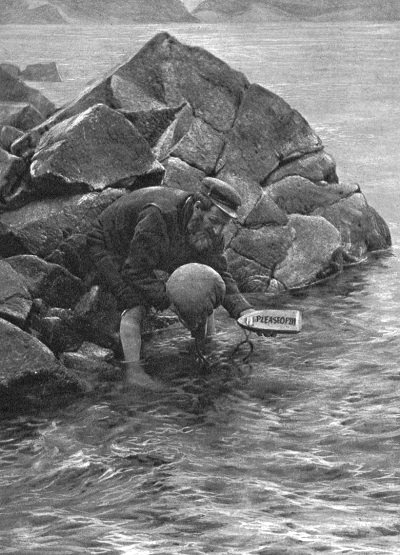
A photograph in Richard Kearton’s With Nature and a Camera shows a man launching a mailboat around the turn of the century. It records the method; it is not a photograph of the 1885 appeal. The book credits the photographs to Richard’s brother Cherry. The boat in the picture looks very small. Some of the work asked of it was not.
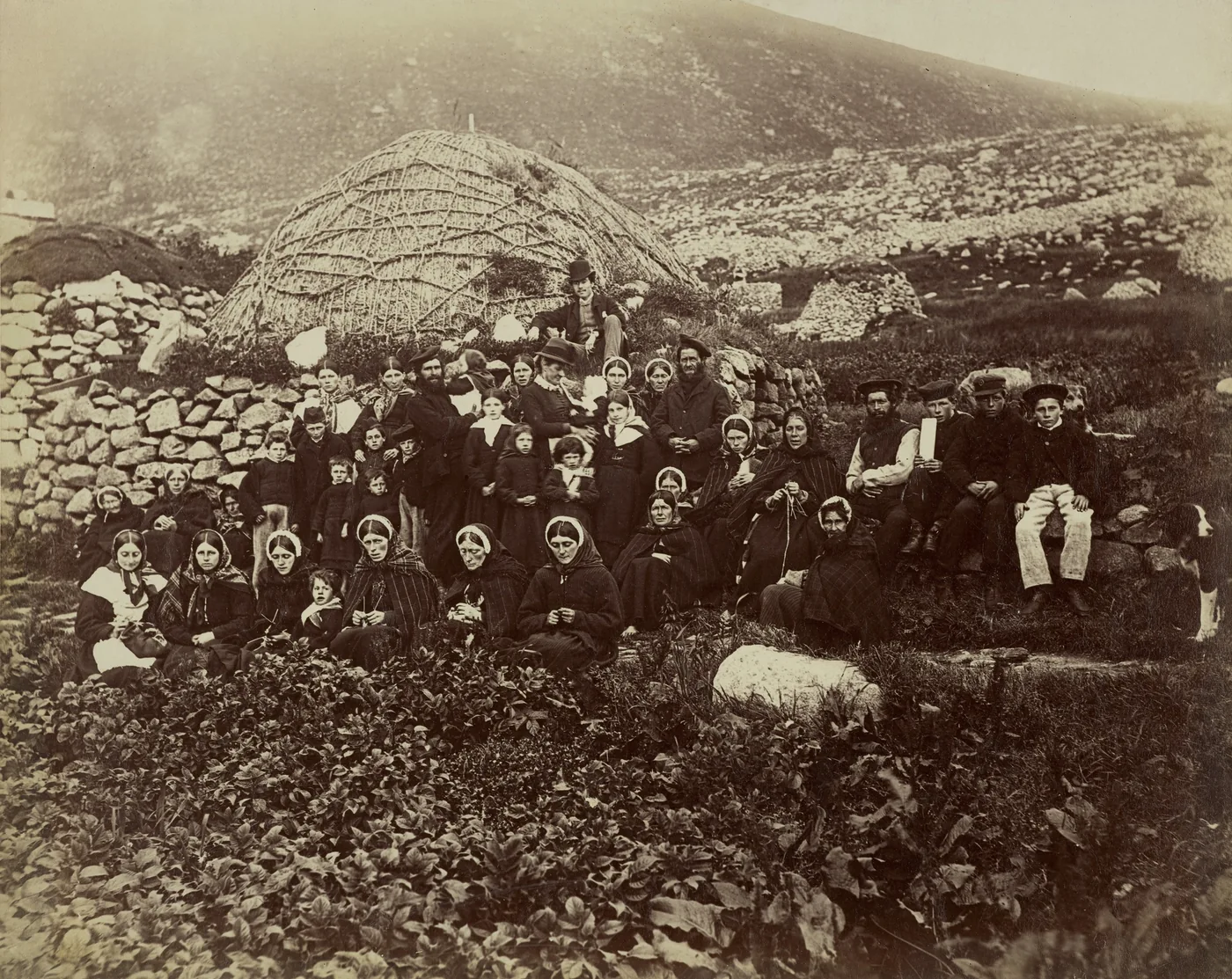
In 1930, the remaining 36 islanders left St Kilda at their own request. The National Trust for Scotland now cares for the islands. In 2010, an archaeologist working there, Ian McHardy, launched another mailboat. It carried seven postcards. No one needed rescuing this time. The voyage recalled the old practice.
In the summer of 2020, four children and their grandfather found the boat on a beach on Andøya, far north in Norway. The cards were still readable. Their grandfather wrote to the National Trust and asked them to send the post on. The Trust checked the addresses and delivered the cards. Ten years after posting, the island mail had arrived with its customary sense of urgency.
One card had been addressed to Norman John Gillies, who had lived on St Kilda as a child. By the time the boat was found, he had died; his son received the card. Another reached a descendant of an earlier resident. The little wooden boat no longer carried news from a community cut off from the world. It found people who were still connected to it.
The ocean was never a reliable postman. But now and then, someone at the other end picked something up from the shore, opened the lid and read.