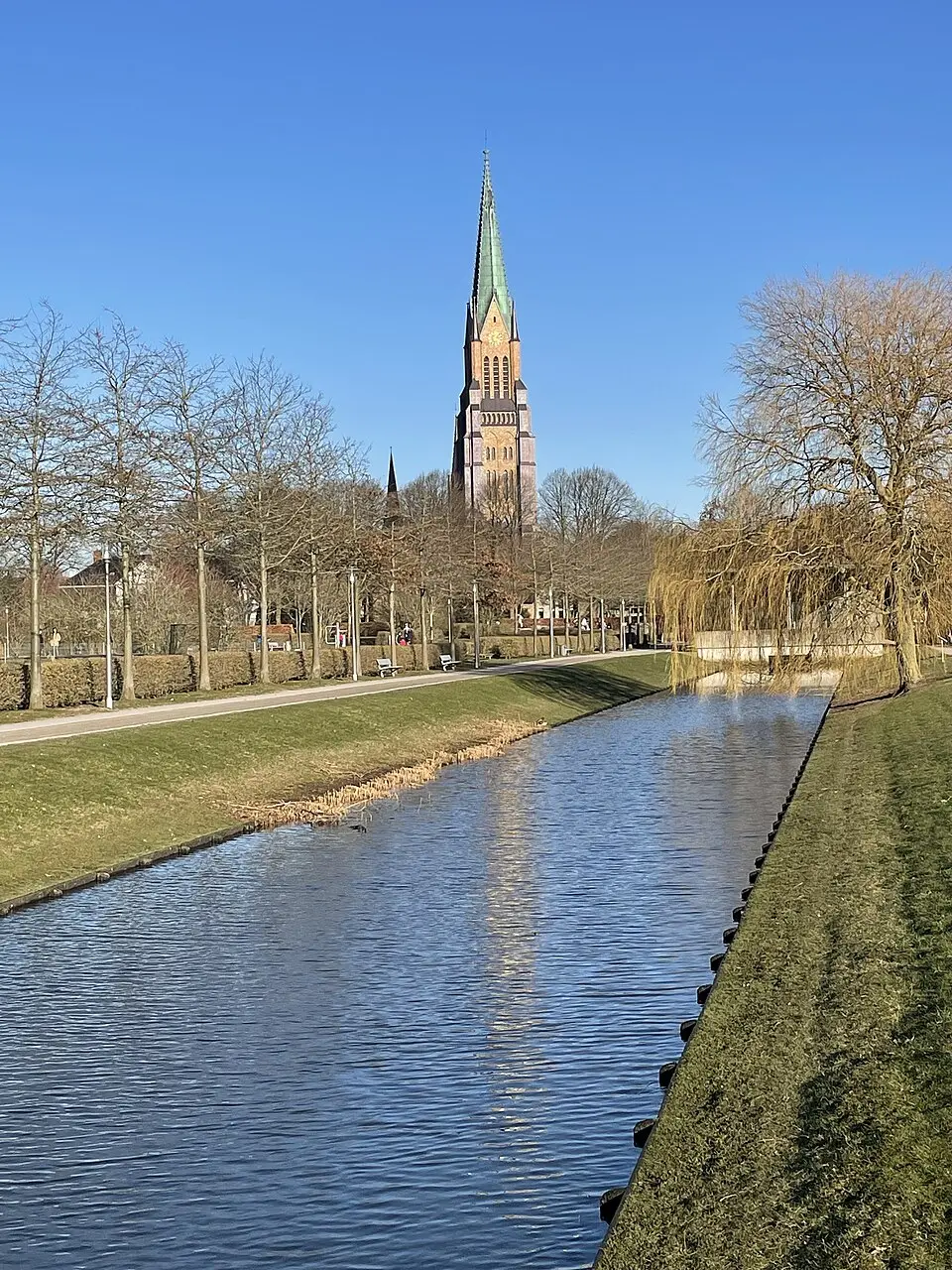
Schleswig Cathedral is difficult to overlook. This is partly due to its 112-metre tower and partly because cathedrals, as a class of building, have never suffered greatly from modesty.
It has stood in one form or another for almost nine centuries. It possesses a celebrated carved altarpiece, nearly 400 figures and the architectural confidence of a place that can be seen from miles away. Visitors arrive already knowing where to point their cameras.
A short walk away, in the old fishing settlement of Holm, stands a chapel that makes no comparable effort.
Most settlements put a market square at their centre. Holm put a cemetery there. This is less cheerful, but considerably more honest.
The fishermen’s houses still gather around it, forming a ring around the dead. For centuries the Holm was an island; only in 1933 was it permanently joined to the mainland. The map changed. The arrangement did not. The cemetery remained in the middle, where a community would ordinarily place whatever it considered essential.
At its centre stands the chapel.
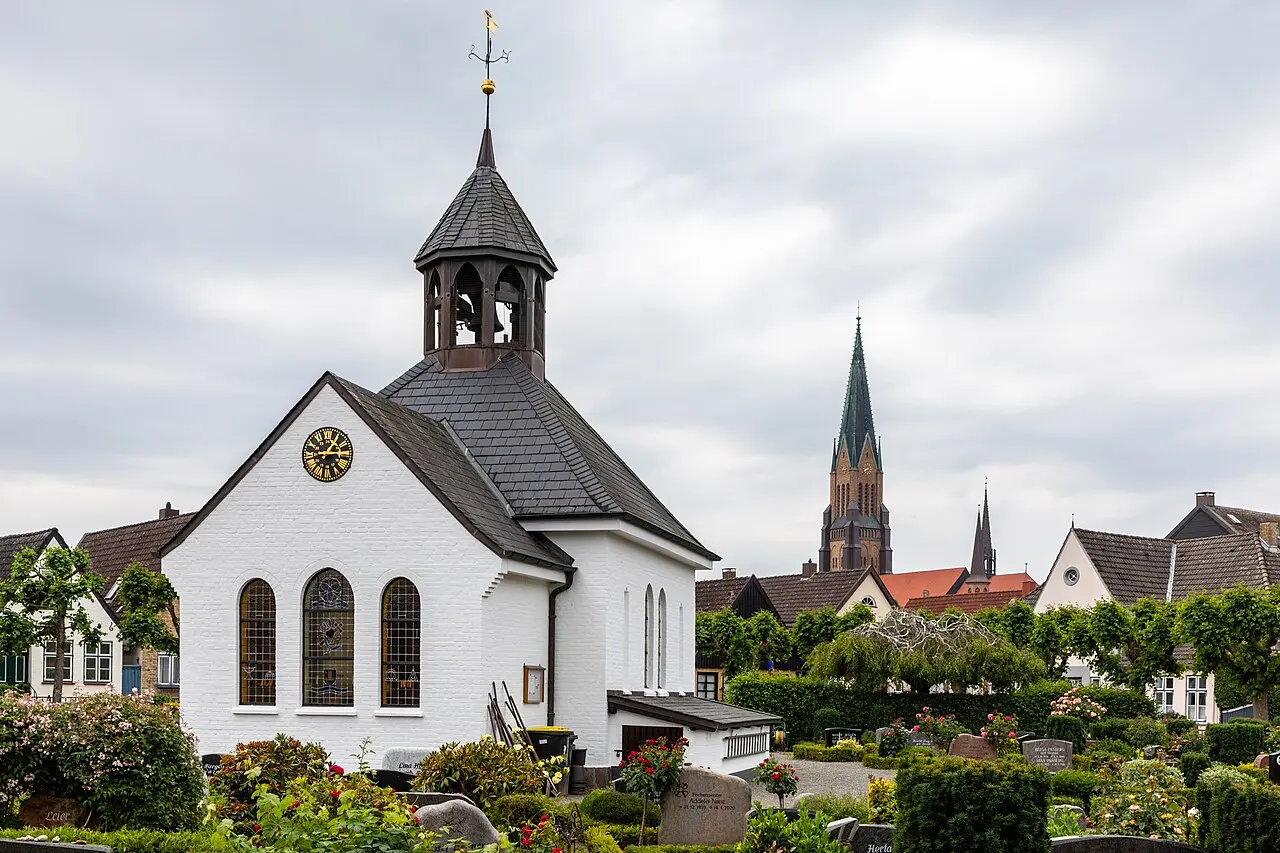
The present building dates from 1876. From the outside it is modest enough to lose a competition with a garden shed. Inside, however, the eye eventually travels upwards.
And there is the fleet.
01
The ships above the pews
Several sailing ships hang beneath the pale wooden ceiling, their hulls suspended over white pews and their rigging caught permanently between departure and return. Some carry dark sails, others pale canvas. All appear ready to move, provided somebody can first solve the minor problem of the missing sea.
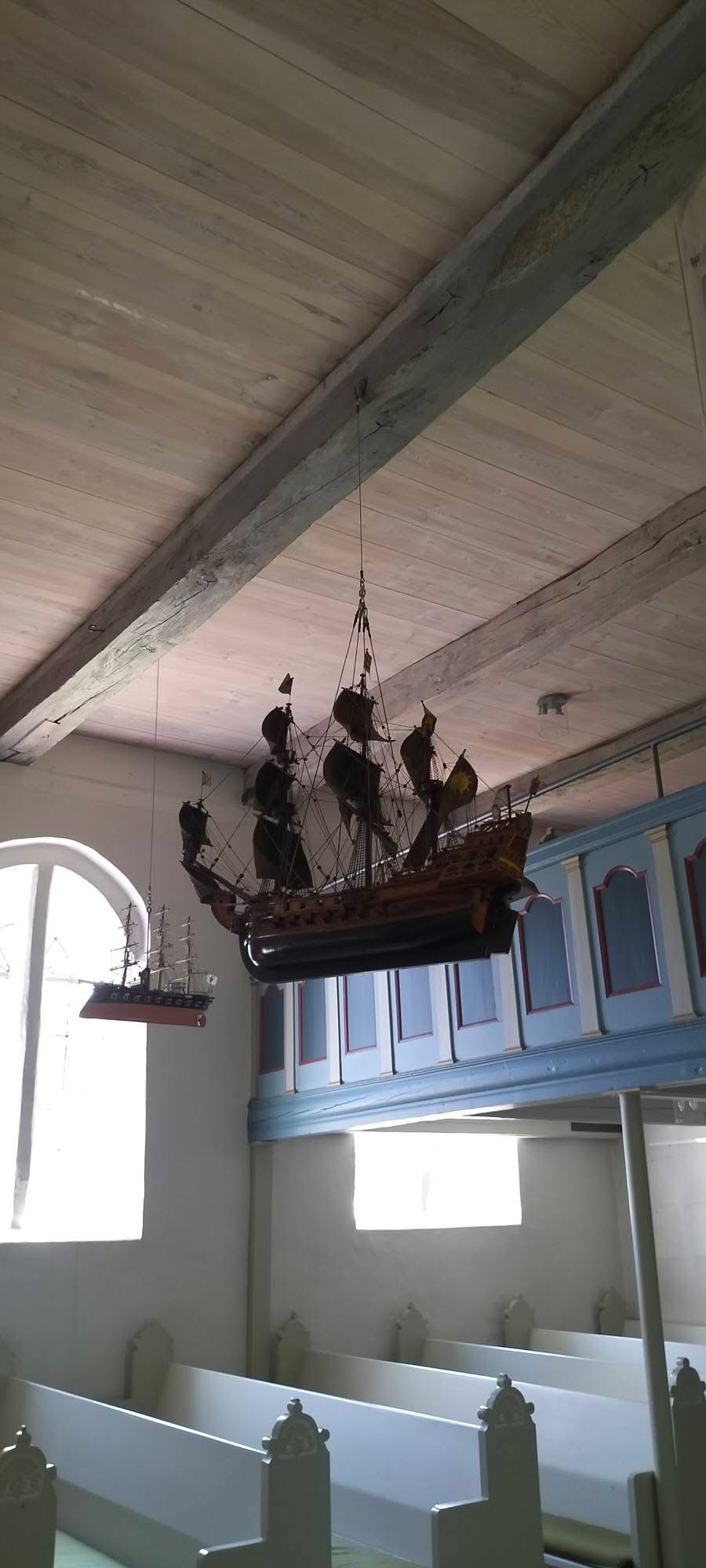
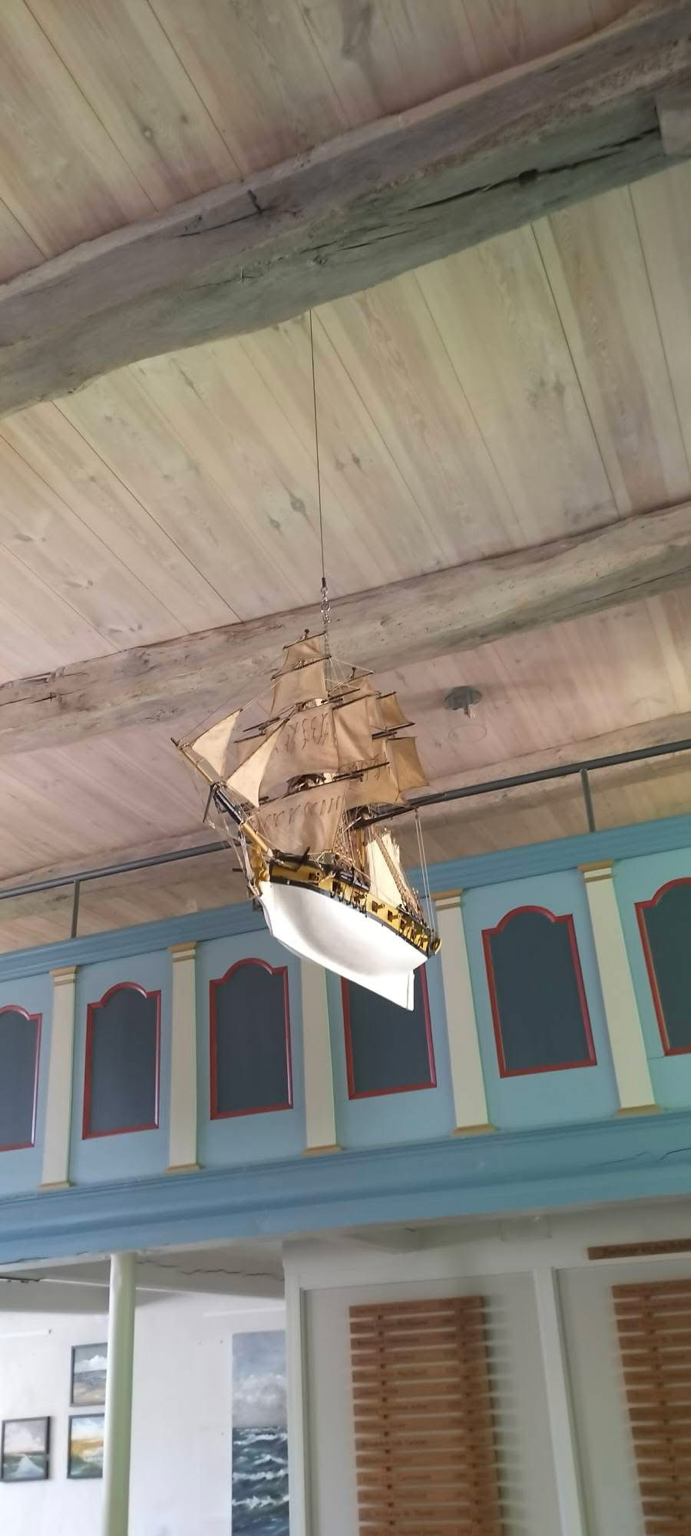
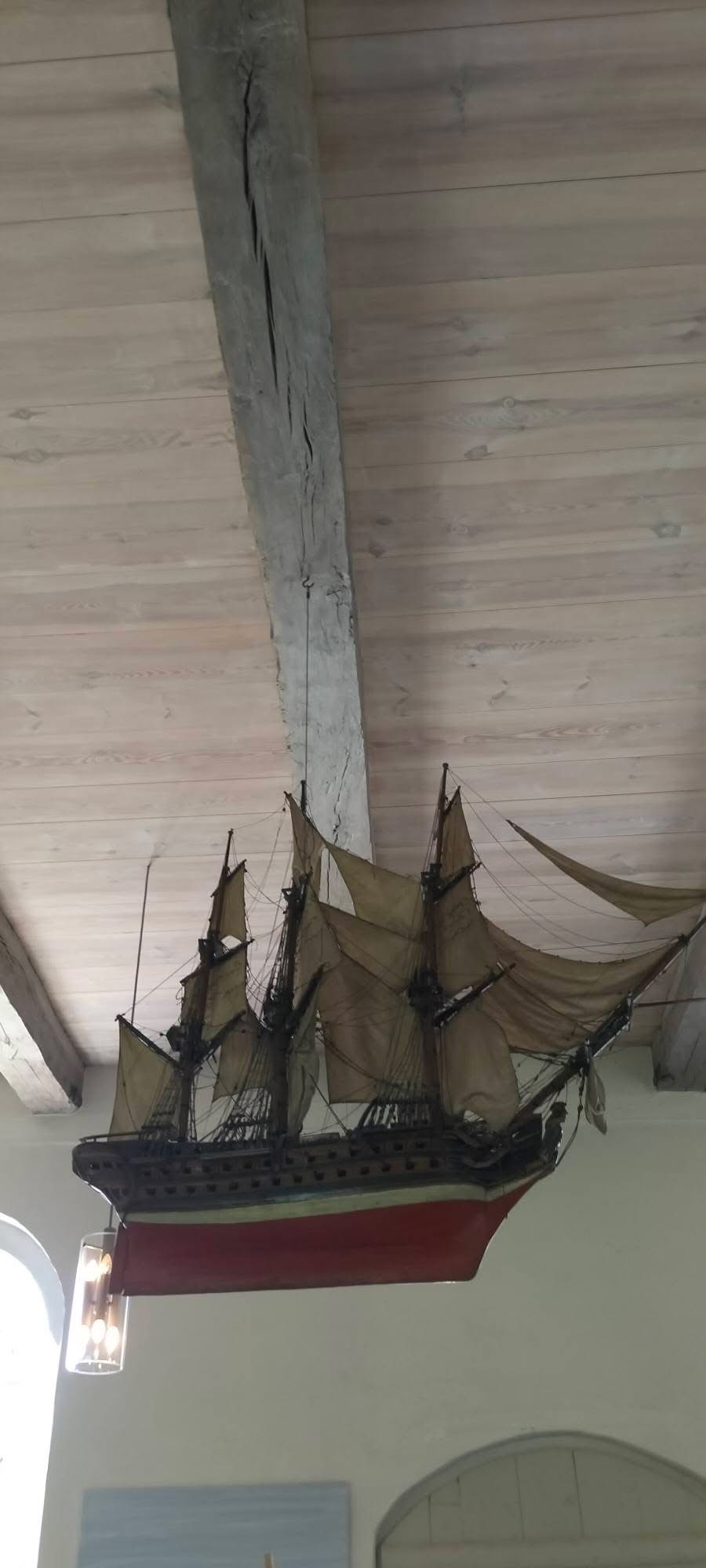
The pale-blue woodwork keeps the room from becoming sombre. It feels neither funereal nor theatrical, but quietly proud: a space made by people for whom remembrance was not an occasional ceremony but a communal responsibility.
Sit there long enough and the room begins to smell of old wood, salt, oak and something almost cypress-like. This may not constitute a scientifically defensible inventory of its building materials. Old rooms are under no obligation to explain themselves accurately to the nose.
The ships belong to a wider northern European tradition. Models were hung in churches across coastal regions, particularly in Scandinavia and around the Baltic. They are commonly called votive ships, although historians point out that the term is often wrong in the Protestant north. Many were not offerings made after rescue from a storm. They were gifts from guilds or private citizens: statements of profession, prosperity and collective identity.
Even their proportions could be adjusted for the congregation below. On older examples, hulls were made flatter and rigging larger so that the vessel looked correct from the pews. Forced perspective had reached the maritime church long before property photographers discovered wide-angle lenses.
These were not toys placed out of reach of children. They were the community looking up and seeing itself.
On the Holm, that community was built around fishing, water and the knowledge that either could take a life without first consulting the timetable.
02
A society for the unavoidable
The cemetery is older than both the present chapel and the society that now cares for it. A state heritage record mentions it in 1603 as the municipal St Mary’s cemetery for poor people. In the eighteenth century it passed into the ownership of the Holmer Beliebung.
The Beliebung itself was founded in 1650, two years after the Thirty Years’ War ended.
War had ended on paper. Disease, hunger and disorder had neglected to read the announcement.
Pest and deprivation made dignified burial difficult. The dead could be removed quickly and buried without the rites or care their families believed they deserved. Men on the Holm therefore joined together aus freiem Belieben — of their own free choosing, without an order from the authorities — to ensure an honourable burial for the deceased and practical support for those left behind.
The phrase supplied the organisation’s name. Its purpose was simpler: nobody should face death, grief or the work surrounding either of them alone.
The Holmer Beliebung still exists. It owns the cemetery and remains part of the social life of the district. In modern legal language, Beliebungen are small mutual insurance associations.
This is a magnificent piece of administrative understatement. A promise made during plague and post-war chaos has survived into the present as an insurance category.
Even death, in Germany, eventually receives a legal form and a responsible officer.
Yet reducing the Beliebung to bureaucracy would miss the point. Its history is not merely about paying burial costs. It is about turning neighbourliness into an obligation strong enough to outlive the neighbours who first accepted it. The living inherit duties to the dead and to one another. The cemetery in the centre of the settlement makes the arrangement visible. The dead are not placed outside community life. The houses continue around them.
The chapel is therefore not a decorative afterthought to a picturesque fishing quarter. It is the room in which the settlement explains itself.
The ships overhead do the same.
03
The old Swede encounters weather
Among those repeatedly drawn back to the chapel was George Kaye, an Irish artist.
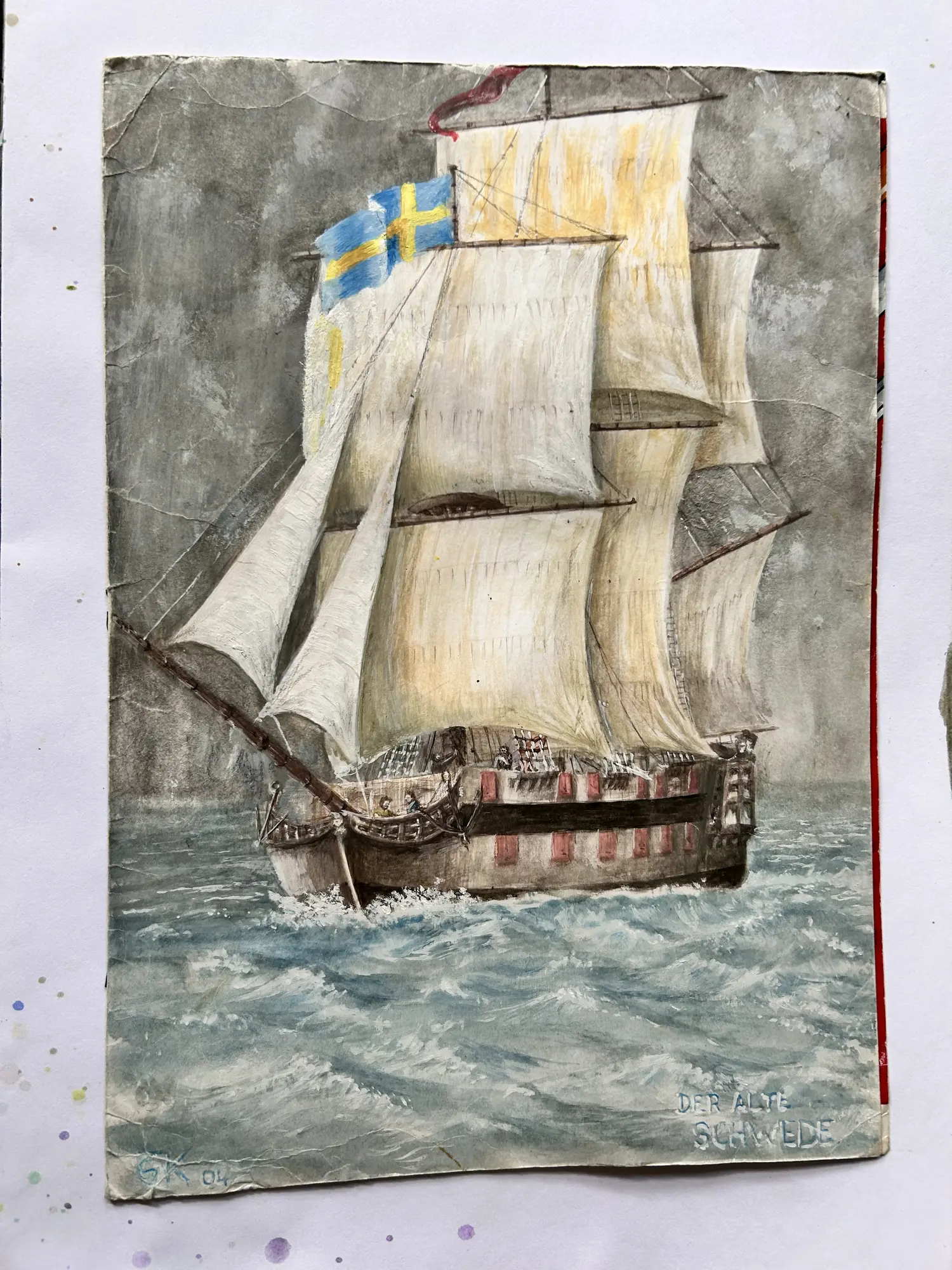
At least fifteen years ago, Kaye painted a watercolour of a Swedish sailing ship. One recollection places the beginning of the work after a visit to the Holmer chapel. Kaye considers that entirely possible, although the interval has been long enough for certainty to loosen its moorings.
That distinction matters. The painting is not a portrait of one identified chapel model, nor was it intended as a historically exact reconstruction of the Vasa or any other particular ship. The real subject is the weather gathering behind it.
The sails fill almost the entire image. Yellow light presses through a grey sky. The water has begun to rise against the hull, and the vessel leans into whatever is coming next. The ship matters, but so does the change about to overtake it.
Kaye called the work Der alte Schwede — The Old Swede. The title came not from an archaeological theory about Schleswig or nearby Hedeby, but from hearing the German exclamation Alter Schwede!
This was a joke before history became involved.
Duden traces the expression, now used for an old friend or as an exclamation of astonishment, probably to veteran Swedish corporals retained by Friedrich Wilhelm of Brandenburg as military instructors after the Thirty Years’ War.
The war ended in 1648. The Holmer Beliebung was founded in 1650.
There is no evidence that the painted ship, the expression and the burial society share a direct historical connection. They do not need one. Kaye painted a joke; history supplied the footnote.
The finished watercolour did not enter a maritime museum. Kaye gave it to his friends Birgit and Uwe, who run the Strand Räuber pub in Pogum, where it keeps company with other models and paintings from the age of sail.
This seems a satisfactory harbour. The Old Swede has weather, maritime company and access to a bar. Many ships have done considerably worse.
04
The monument one has to find
The contrast with Schleswig Cathedral is tempting because it is so neat. The cathedral announces memory in stone, height and carved figures. The Holmer chapel suspends it from the ceiling on thin wires.
One monument dominates the skyline. The other smells of timber and salt.
One was built to gather a city beneath the authority of the Church. The other belongs to a community that organised itself because authority, during war and plague, was not enough.
The comparison should not become a contest. The cathedral deserves its visitors. But the chapel rewards a different kind of attention — the attention that begins when the recognised landmark has been seen and somebody continues walking.
Inside, nothing performs. The pale-blue wood remains pale blue. The pews wait. The ships hold their impossible course above the congregation.
They carry pride without grandeur, grief without oppression and history without an admission desk.
Cathedrals are designed to be seen. The Holmer chapel has to be found.
Kaye’s Old Swede has weather and water beneath it. The chapel fleet remains overhead, waiting for the next person who remembers to look up.